
If you lie awake with a busy mind, wake in the early hours, or start the day unrefreshed, you are not alone — and you do not have to simply live with it. Acupuncture is a supportive, drug-free option that may help your nervous system settle so sleep can come more easily.
Poor sleep is rarely caused by one thing. Stress, pain, hormonal changes, and daily habits all feed into how easily you fall asleep and how soundly you stay asleep. At SpringWell Acupuncture in Herndon, VA, insomnia care starts by understanding your whole pattern, not just the hour you get into bed.
Short answer
Acupuncture for insomnia works with the whole pattern behind your sleepless nights — calming an overactive stress response while easing the tension, pain, or hormonal shifts that fragment sleep. At SpringWell Acupuncture in Herndon, VA, treatment is individualized, drug-free, and usually weekly at first, building steadier sleep night by night.
Can Acupuncture Help With Insomnia?
Yes — and this is where acupuncture’s strengths show. Clinical studies and reviews report that acupuncture can improve sleep quality, help people fall asleep more easily, and extend deeper sleep. Its real advantage is that it treats the sleepless night and the pattern behind it at the same time, rather than only silencing the symptom until morning.
Treatment supports sleep in a few connected ways:
- Whole-pattern care: one treatment plan can address the racing mind, the tight shoulders, and the 3 a.m. waking together, because in TCM they are parts of a single pattern — not separate problems.
- Nervous-system regulation: helping the body shift out of a wired, alert state toward rest, which matters when a racing mind is what keeps you awake.
- Drug-free and gentle: no morning grogginess and no dependency — just quiet, restorative sessions that many patients describe as the most restful hour of their week.
- Stress and anxiety support: addressing the tension and worry that so often travel with insomnia. Our research summary on acupuncture for anxiety explores this connection in more depth.
- Pain and physical tension: easing neck, shoulder, jaw, or back discomfort that makes it hard to get comfortable or stay asleep.
- Hormonal transitions: supporting steadier nights when sleep is disrupted during perimenopause.
Learn more about stress and sleep acupuncture at SpringWell.
Why Sleep Becomes Hard: Patterns We See
Two patients can both say “I can’t sleep” and need quite different care. Common patterns include:
- The racing mind: falling asleep is hard because the day replays on a loop, often alongside stress or anxiety.
- The 3 a.m. waking: sleep comes, but the night breaks into pieces — common during perimenopause, sometimes with heat or night sweats.
- Pain-fragmented sleep: discomfort wakes you, or you wake stiff and unrefreshed.
- The exhausted-but-wired pattern: deep fatigue in the day, then a second wind at night.
Traditional Chinese medicine views sleep as the mind settling for the night, and it reads these patterns — together with your energy, digestion, mood, and cycle — to choose points and build your plan. The details matter because the pattern, not just the label “insomnia,” guides treatment.
Better sleep usually starts with understanding why your nights look the way they do.
What Treatment Looks Like at SpringWell
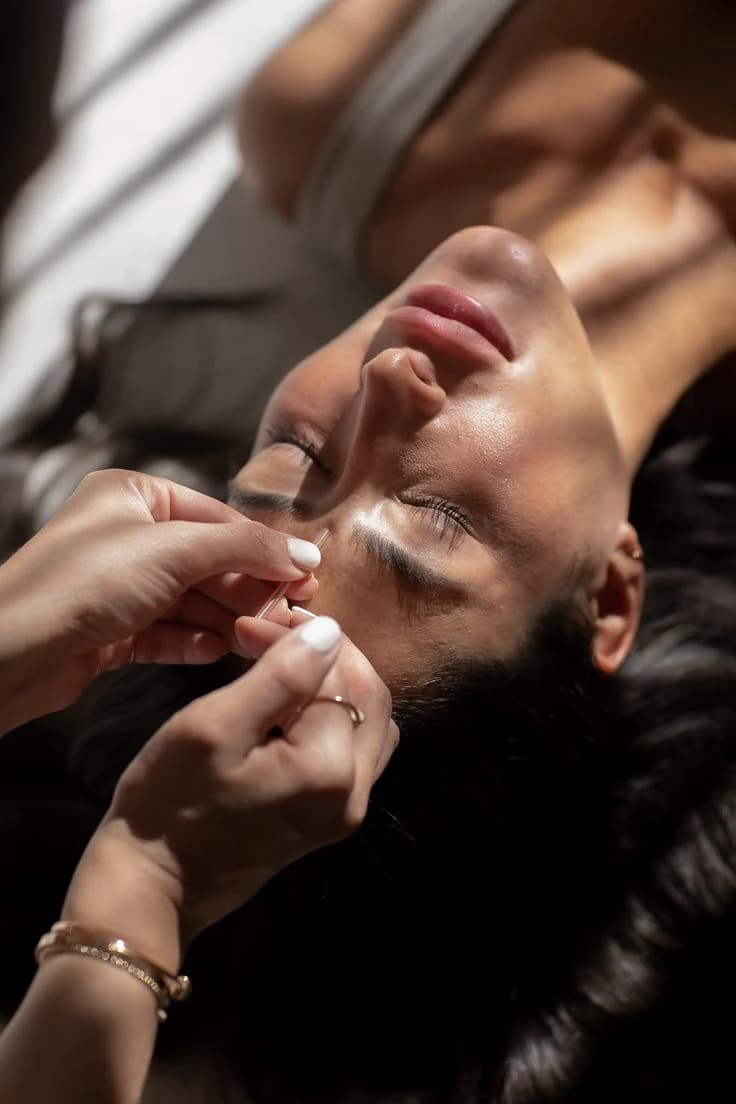
Your first visit begins with a conversation: when sleep became difficult, what your nights actually look like, caffeine and alcohol, medications, work schedule, and what else is going on with your health. Treatment itself is quiet and unhurried — fine needles, a darkened room, and time to genuinely rest.
Most insomnia plans begin with weekly visits over about four to six weeks, then reassess together. As sleep steadies, visits may space out, and the plan keeps adjusting to your pattern — points, focus, and rhythm all follow how your nights are changing.
SpringWell is open Tuesday, Thursday, Friday, and Sunday, 9:00 AM to 6:30 PM, so visits can be scheduled at a consistent time that supports a steadier routine.
Habits That Support Better Sleep
Acupuncture works best alongside steady daily habits. These are the foundations we discuss most often:
- Keep a consistent wake time — it anchors your sleep drive more than a fixed bedtime does.
- Get morning light within an hour of waking when you can.
- Set a caffeine boundary — early afternoon is a common cutoff.
- Build a wind-down hour with dimmer light and fewer screens before bed.
- Keep the bedroom cool, dark, and quiet.
- If you are awake and frustrated, get up briefly and return when sleepy, rather than watching the clock.
None of these replaces care for ongoing insomnia, but together they give treatment a better foundation to build on.
Common Questions About Acupuncture for Insomnia
Does acupuncture for insomnia hurt?
Acupuncture needles are very fine, and most patients find sessions deeply restful — many rest or even doze during treatment. Any brief sensation at a point usually settles within moments.
How many sessions before I notice a change in my sleep?
It varies. Sleep patterns usually change gradually, so care often begins with weekly visits over about four to six weeks before judging the response together. Some patients notice calmer evenings sooner; steadier sleep tends to build over a series of visits.
Can I have acupuncture while taking sleep medication?
Yes. Acupuncture is used as complementary care alongside medication and other treatment your physician recommends. Do not start, stop, or change any sleep medication without talking with the clinician who prescribed it.
Can acupuncture help sleep during perimenopause?
Care can be adapted when night waking, hot flashes, or a racing mind are part of the perimenopause picture. Treatment addresses your overall pattern — sleep, temperature, mood, and cycle changes — alongside the medical care you already receive.
Where can I find acupuncture for insomnia near Herndon and Reston, Virginia?
SpringWell Acupuncture is located at 463 Carlisle Dr Ste B, Herndon, VA 20170 and is open Tuesday, Thursday, Friday, and Sunday from 9:00 AM to 6:30 PM. The clinic serves patients from Herndon, Reston, Sterling, Vienna, Tysons, Fairfax, and nearby Northern Virginia communities.
SpringWell Acupuncture welcomes patients from Herndon, Reston, Sterling, Vienna, Tysons, Fairfax, and the broader Northern Virginia and DC metro area. The clinic is located at 463 Carlisle Dr Ste B, Herndon, VA 20170.
Sleep support in Herndon
Start sleeping with a plan.
Schedule an initial consultation to talk through your sleep pattern and what care may look like for you.